
About the condition
Hip replacement replaces damaged joint surfaces with an artificial ball and socket, usually when pain and disability remain substantial despite other care.
Treatment options
Before surgery, discuss goals, current walking ability, home support and health optimisation. Exercise and practical preparation can help you approach recovery with a plan.
Surgical considerations
Implants may be cemented, uncemented or hybrid. Surgical approach and additional procedures affect precautions. Ask your surgeon which movements and weight-bearing limits apply to you.
Rehabilitation principles
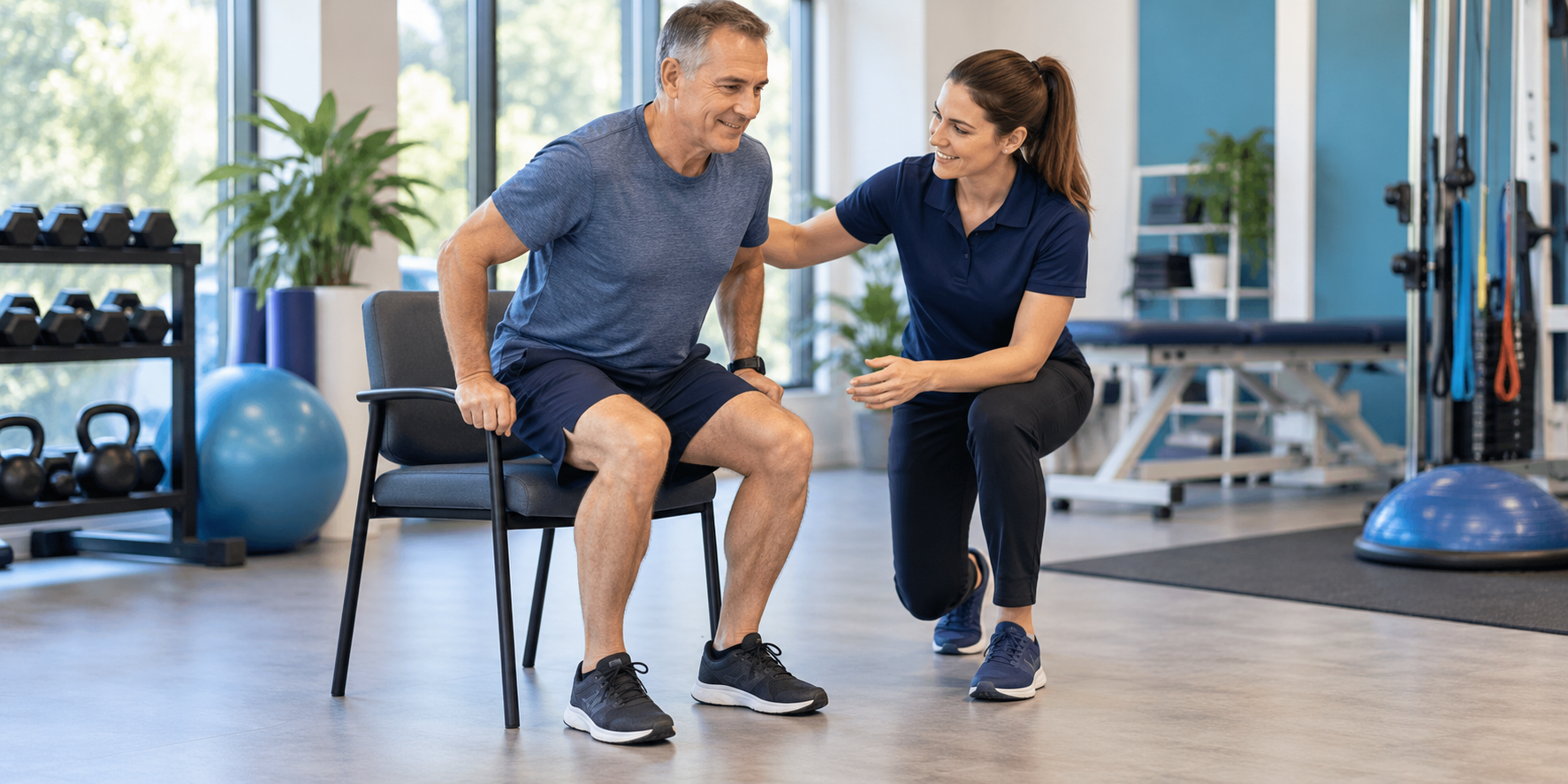
Rehabilitation builds walking, hip strength, balance and everyday tasks. Early support may include a walking aid. Progress should follow your operation instructions and your response to activity.
Recovery expectations
Recovery continues beyond wound healing. We can track walking confidence and tasks such as stairs and getting out of a chair. High-impact activities require an individual discussion; an implant does not guarantee unrestricted sport.
Evidence context
AAOS patient guidance supports progressive activity and surgeon-specific precautions; it does not prescribe one programme for every approach.
Research & guidance
Evidence sources checked: 2026-10-11.
Editorial draft — HK+A clinical review pending.