
About the condition
Knee replacement resurfaces damaged joint surfaces. It is commonly considered for substantial arthritis-related pain and disability.
Treatment options
Preparation includes understanding the operation, planning help at home and setting realistic activity goals. Continue appropriate activity within your current tolerance.
Surgical considerations
Total and partial replacements differ. Implant choice and ligament management vary. Your surgeon’s instructions take priority, especially where there are additional procedures or complications.
Rehabilitation principles
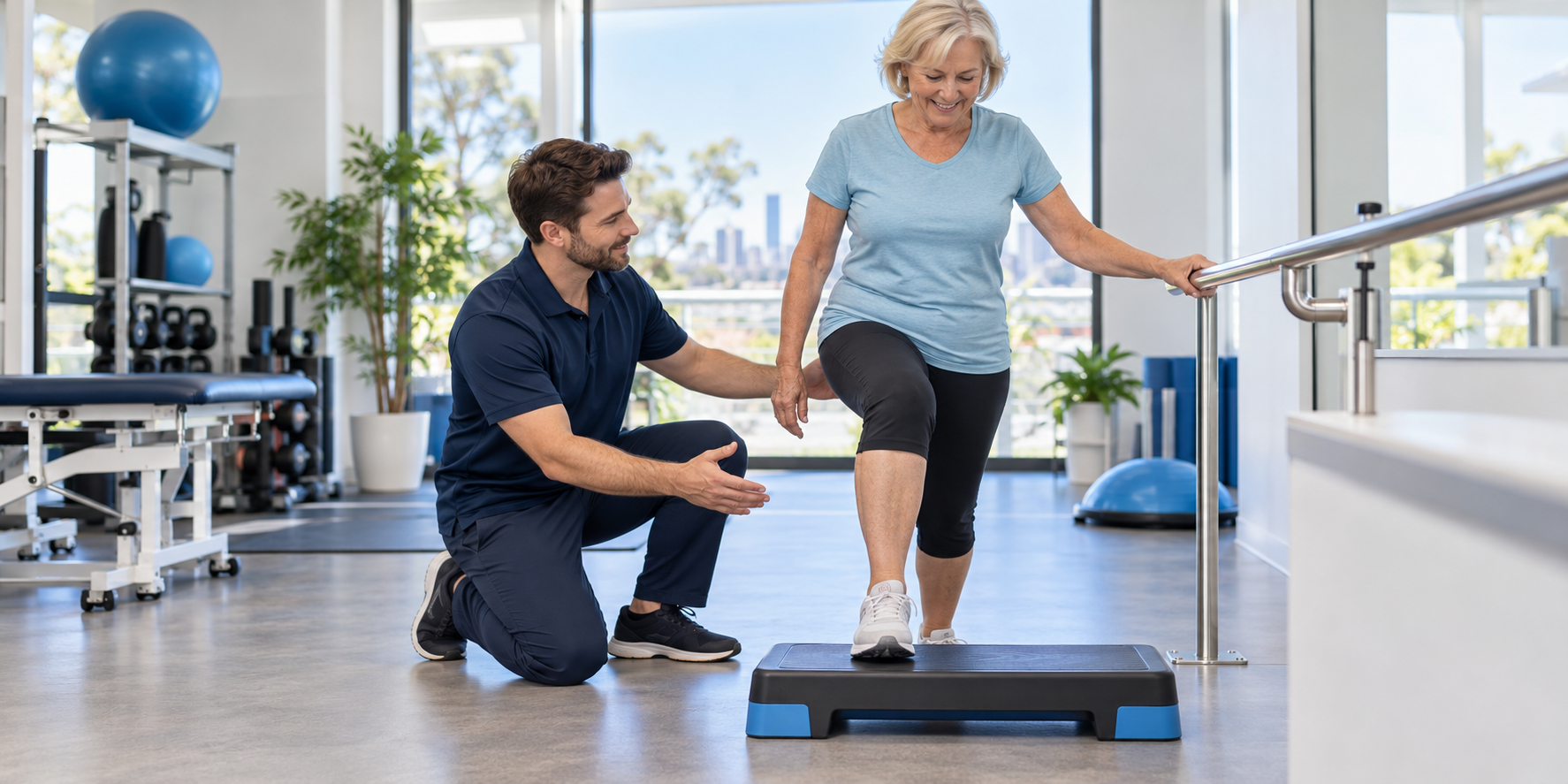
Rehabilitation addresses walking, knee movement, quadriceps strength and practical tasks. Progress exercises according to symptoms and function; persistent difficulty or worsening swelling warrants review.
Recovery expectations
Pain and swelling can remain during recovery, and improvement is not always linear. Track walking, stairs and chair transfers alongside range of movement. A replacement does not promise a perfectly natural-feeling knee or unlimited high-impact activity.
Evidence context
AAOS patient guidance supports exercise and gradual activity after replacement. Individual goals and surgical factors shape the programme.
Research & guidance
Evidence sources checked: 2026-10-11.
Editorial draft — HK+A clinical review pending.